http://elanartist.wix.com/elanhiart

http://elanartist.wix.com/elanhiart
Elan Portal

Sunday, February 14, 2016

Teaching Diversity Through Common Practice


Artwork by Student from Thurgood Marshall Lower Academy

Teaching Diversity Through Common Practice
by Elan Marie Dorcena Cadiz Ferguson

After 16 years of art education in New York City I have gained a lot of knowledge and insight on best practices, teaching techniques and materials. And because I live and work in the city I have learned the trails and tribulations of being a traveling teaching artist.  

I worked for the Police Athletic League (P.A.L), Astoria Beacon Program, Young Adult Institute (Y.A.I), Casa Duarte, P.S. /I.S. 180, Say Yes To Education (affiliated with Columbia’s Teachers College), Harlem School of the Arts, Thurgood Marshall Upper and Lower Academies, Harlem Gems (Harlem Children Zone), No Longer with Empty, Cool Culture, Bank Street College, Weeksville Heritage Center, the Studio Museum in Harlem, New York Historical Society and always looking to expand my experience, practice my skill and learn as much as I can. My Bio.

After I left the Studio Museum in Harlem I had decided to begin assessing my work. During my reflection I remembered a workshop on hair braiding. I tried to get artist educator, Nontsikelelo Mutiti to facilitate a pop-up version of her Ruka (to braid/to knit/to weave) but due to her popularity and busy travel schedule she was unable to attend :(.  Despite my disappointment, the show had to go on and I ended up creating a workshop where participants were given the opportunity to practice hair braiding and to see images and information about braiding throughout time and history

Artwork by Nontsikeleo Mutiti
But braiding did not stay in Africa. As the evolved homo sapiens expanded all over Africa and beyond so did braiding. Depictions of braids and braiding can be found on artifacts/artworks that are estimated to go as far back as to 28,000 - 25,000 BCE, for example the Venus of Willendorf
All over the world humans used braiding as a means to manipulate hair, leather, metal, plants, paper, fabric and more. 

Gsaeng Style,
 Chosen Dynasty
Korea
A Wishhan Indian Bride
by Edward S. Curtis


At first I was obsessing over images I found on Pinterest. Vintage photographs of people from all over the world with braids. As my interest developed I looked for credible websites that would give me free access to primary sources and detailed information. As a museum educator I instantly looked to larger institutions of learning such as the Metropolitan Museum of Art and Smithsonian. Metmuseum.org proved to be very helpful.


This past Saturday I had an audition with the Center of Arts Education. Part of the audition was to create and facilitate a 20 minute lesson. Although I ended up doing too much, preparing the lesson helped me realize how similar and different humans are and how those similarities can introduce diversity in a non threatening and familiar way; 
Learning Diversity through Common Practices

No matter how different humans are there are common similarities such as braiding that can connect us. Learning Diversity through Common Practices allows learners to experiment with the familiar and the unfamiliar on common ground. In Addition, art lessons that use common everyday activities in combination with visual inquiry, touch objects, images, hands on art activities and research, can teach students geography, social studies, English, math and more.

As I develop my ideas and learn more I will share in hope that humanity can develop and practice healthier ways of existing on this planet together as one race with many different religions, traditions, cultures and communities.   

Other artists that have influenced my interest in hair and identity have been Lorna Simpson and So Yoon Lym
So Yoon Lym

Ebony series,
Lorna Simpson

Tuesday, September 22, 2015

Family Coat of Arms


coat of arms is a unique heraldic design on an escutcheon (i.e. shield), surcoat, or tabard. The coat of arms on an escutcheon forms the central element of the full heraldic achievement which consists of shield, supporterscrest, and motto. The design is a symbol unique to an individual person or family (except in the UK), corporation, or state.* (source: Wikipedia)
Heraldry is the activity of creating or studying coats of arms and of tracing and recording family histories. 
Escutcheon is a defined area on which armorial bearings are displayed and which usually consists of a shield also a protective or ornamental plate or flange (as around a keyhole). 

In this workshop participants were given shield outlines to choose from in order to design their own Family Crests or coat of arms. Some things to think about when designing a symbol for your family:

What kind of jobs do my family members have? 
A lot of members in my family are in the arts, education and social services. If I was to create a symbol for my family it would have icons that represented these fields of work and study. 

Where does the oldest recorded members of my family come from and where does my family live? 
Location can be a significant part of a persons family. 

What is your family good at?
Sometimes its hard to tell from a glance but spend time thinking about your family and what you all do well together. 

Are there any special events, occasions and or stories that are significant to your family tree?
Special stories and or historical content can create an interesting symbol to add to your coat of arms. For example: My mother's side of the family migrated north from the south during the fifties and my father's side of the family migrated from Puerto Rico. 

This discussion can also lead to creating a family tree and learning more about your family. 


Sunday, September 20, 2015

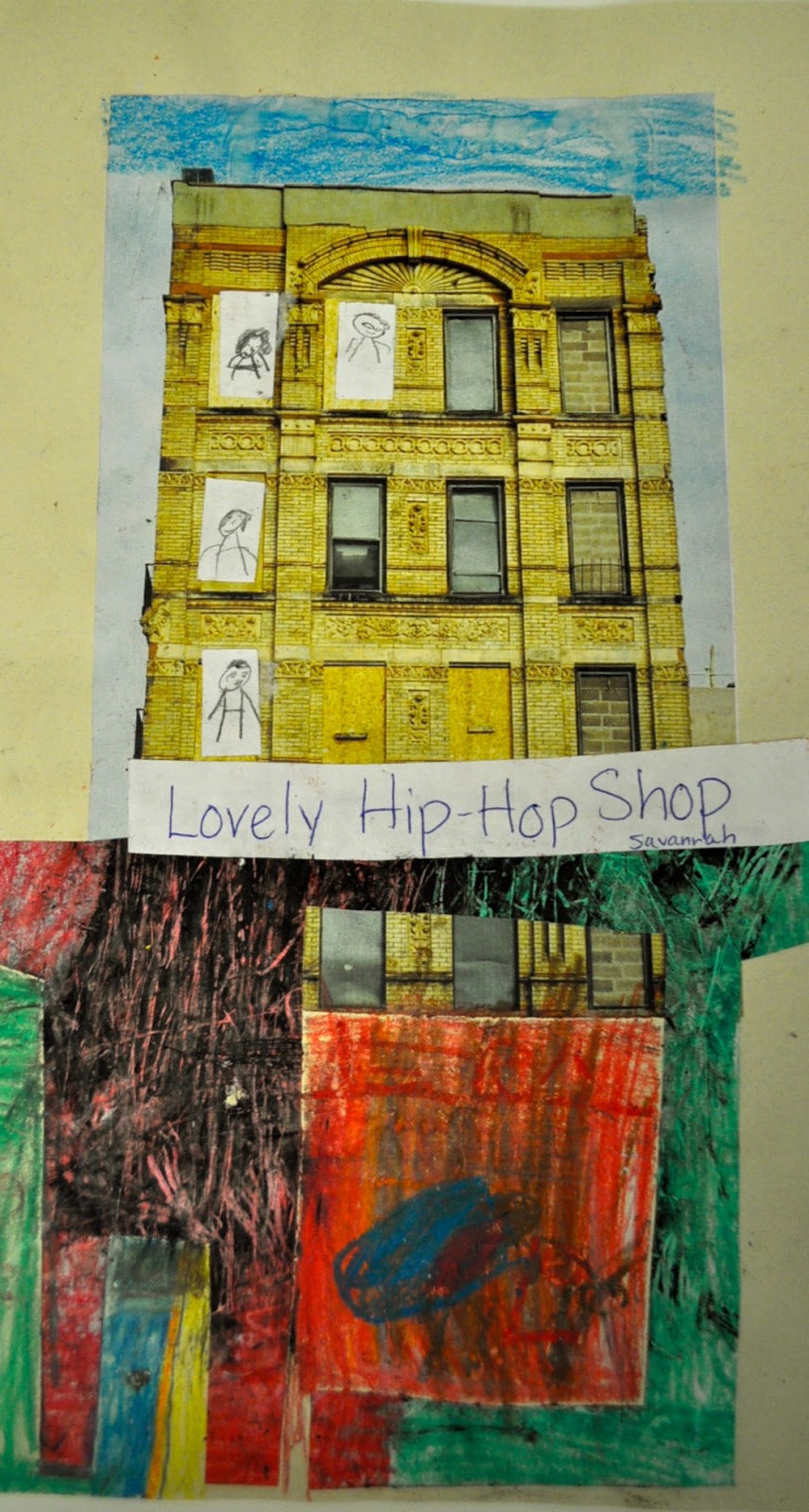
Business Project

If you could start a business, what would it be?
This project was one of several, designed as part of a curriculum about Me, Myself and my community. We began with the students and their families and ended with their definition of community. 
A part of understanding community is thinking about all of its parts. In this project the students and I discussed and listed the people, places and businesses that make up their communities. Students then created their own businesses. Here are some questions I asked them about their businesses: 
What does my community need? 
What kind of business will do well in my community? 
Is my business helpful and/or supportive to my community? 
I used a photo image of an existing building from the student's community in order to make and  reinforce the familiar. Growing up in Harlem, partially abandoned buildings with storefronts at the bottom. This gave the students the ability to re-imagine their own communities however they saw fit. 


History made Fun!

My son in the

Barbara K. Lipman Children's History Library

Having fun with History... My children and I visited New York Historical Society this past Friday and we had a blast! We loved the Dimenna Children’s History Museum, http://www.nyhistory.org/childrens-museum There are weekly programs for different ages, plenty of historical artifacts and objects to look at and touch and fun inactive games and hands on activities for young people (as well as their caregivers) to partake in. We were also able to check out three exhibits,The Hirschfeld Century: The Art of Al Hirschfeld , Picasso's "Le Tricorne"Freedom Journey 1965: Photographs of the Selma to Montgomery March by Stephen Somerstein and watched a thirty minute multimedia film experience, NEW YORK STORY.

i am very excited to visit during the Superheroes in Gotham exhibit that will be arriving at the Historical Society Ocotober 9th as well as the Holiday Express: Toys and Trains from the Jerni Collection in October 30th. 


Tuesday, September 15, 2015

Performing Arts Camp

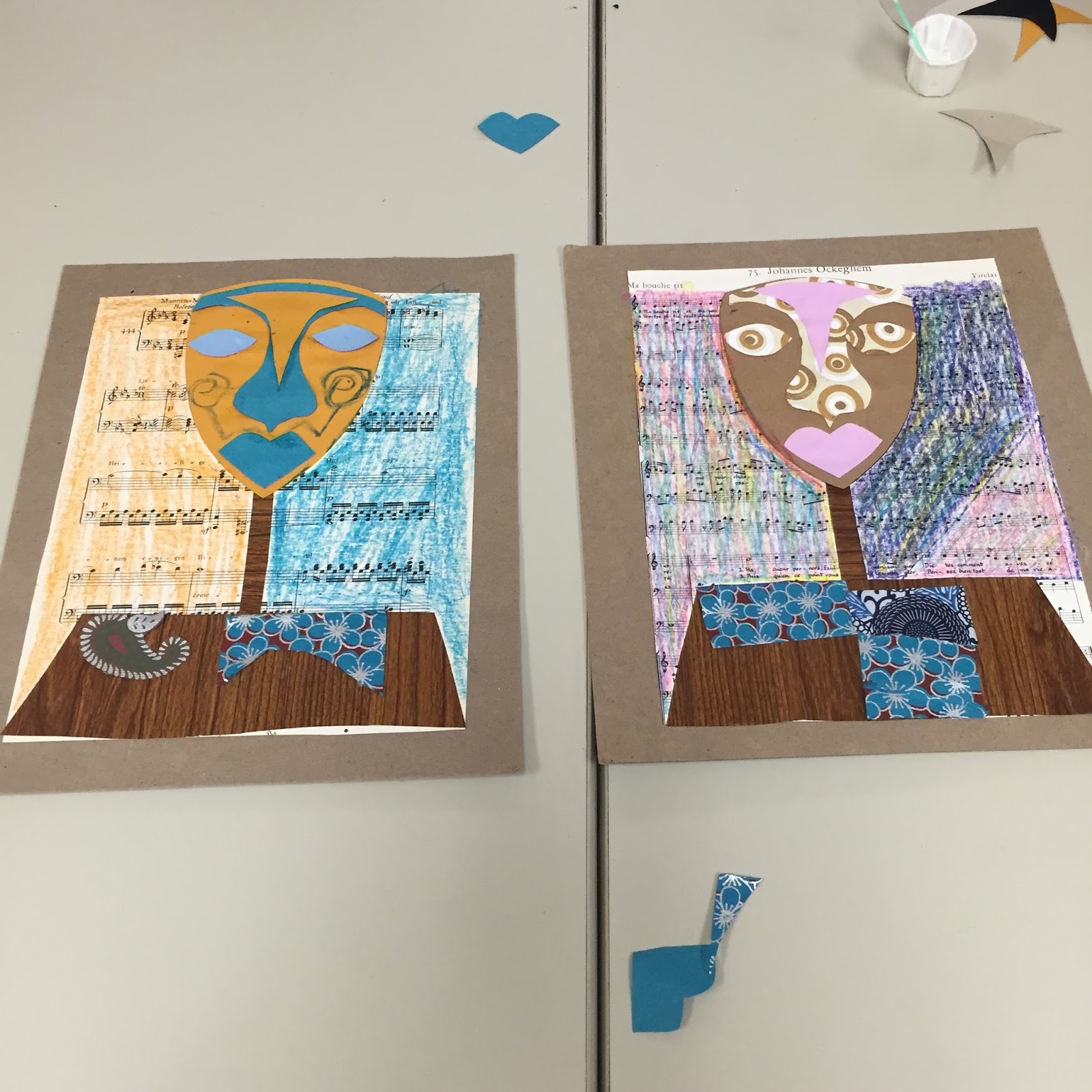
The director of the Project Performing Arts camp invited me to facilitate a workshop that incorporated music, story and performance. I shared examples of art work I have created with families as a Family Programs Coordinator/Teaching Artist. We discussed what art is to us and its different purposes. For the younger group I read them my book, I Love Collage, then we read poems from Honey I Love by Eloise Greenfield. My favorite poem from this collection is Things.
After we read each group were given pieces step by step until they created their own original artwork inspired by masks. For the younger group I had them practice their writing so they were asked to create their own poem or pictorial story on the back of their artwork.


Sunday, September 6, 2015

Playing with Clay


After going to the Museum of Natural History I had my children choose a project that was inspired by something they had seen. My daughter wanted to paint and my son decided to create a marionette. Before we got home we stopped at the neighborhood art store, Artist & Craftsman Supply at 2108 7th Avenue and we picked up some supplies.

My daughter loves this store but my son was quite impatient and not looking forward to starting his marionette. He in fact told me that he "hates art" and did not want to be bothered. Despite his reluctance he chose parts for his puppet and we went home.

Because he was so irritable I left him alone for an hour to decompress but after I cooked dinner I offered we play with some clay. He was hesitant because he did not want to commit to a project and I told him it was just playing. I wanted him to experience the clay without rules and/or conditions and during this play we made different things such as people, objects and a pinch bowl.

What I love about playing with clay is the versatility, its textural nature and impermanence. You can easily spend 10 to 20 minutes creating something and destroy it in just a couple of seconds. In a world filled with stuff, I think it is easy to become a consumer/hoarder trying to keep all that you can but here we learned the value of non-attachment and why it is okay to let some things go. We also practiced letting go creatively. We made what we felt like making and after 30 minutes we decided to stop. And we did.

Above is a picture from the video I took of us crushing our pinch pots/bowls. After we crush them you can hear my son's little squeal of delight as we pulverize our creations and prepare to make something new. Video Link: https://youtu.be/hbQKORcOrWg

I share my son's moodiness not to embarrass him or to make light of his discomfort. I appreciate and love him however he behaves (as long as its not detrimental to him or others). I share this so that when parents find it difficult to engage their children in a cultural and/or art experiences and they are greeted by moodiness and frustration, Don't feel bad and/or give up! Taking breaks is good! everybody experiences some sort of conflict when raising children. That is a part of life :) It also doesn't mean the child is not receiving the information. I to, was that moody child at that stage of my life and all of my experiences helped me become the person/artist/mother I am today.